

 Shrines
  Lebanon
  Founded in 1952
  Zouk Mosbeh
 mazar.christroi@sistersofthecross.org.lb
  Facebook page

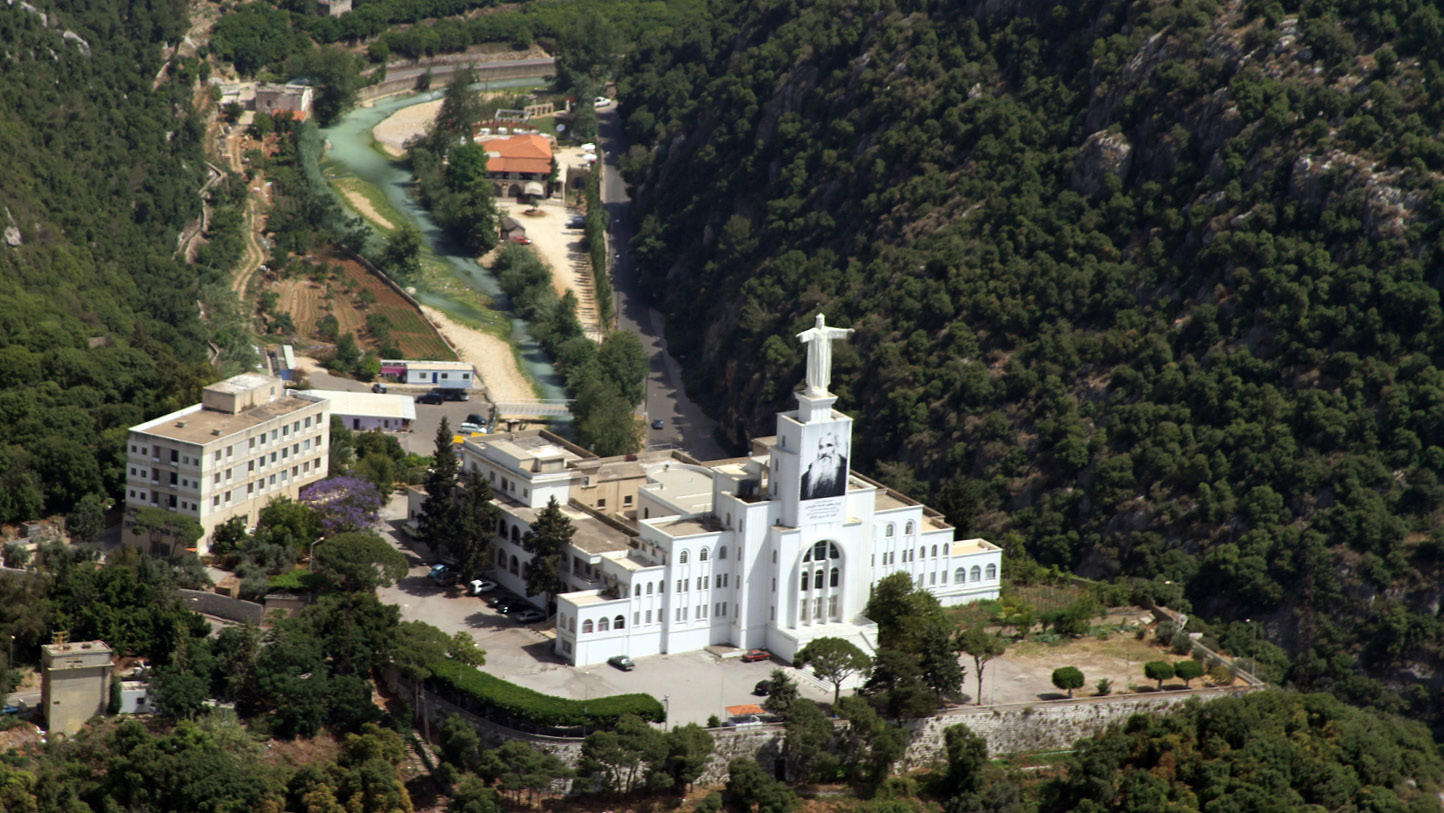
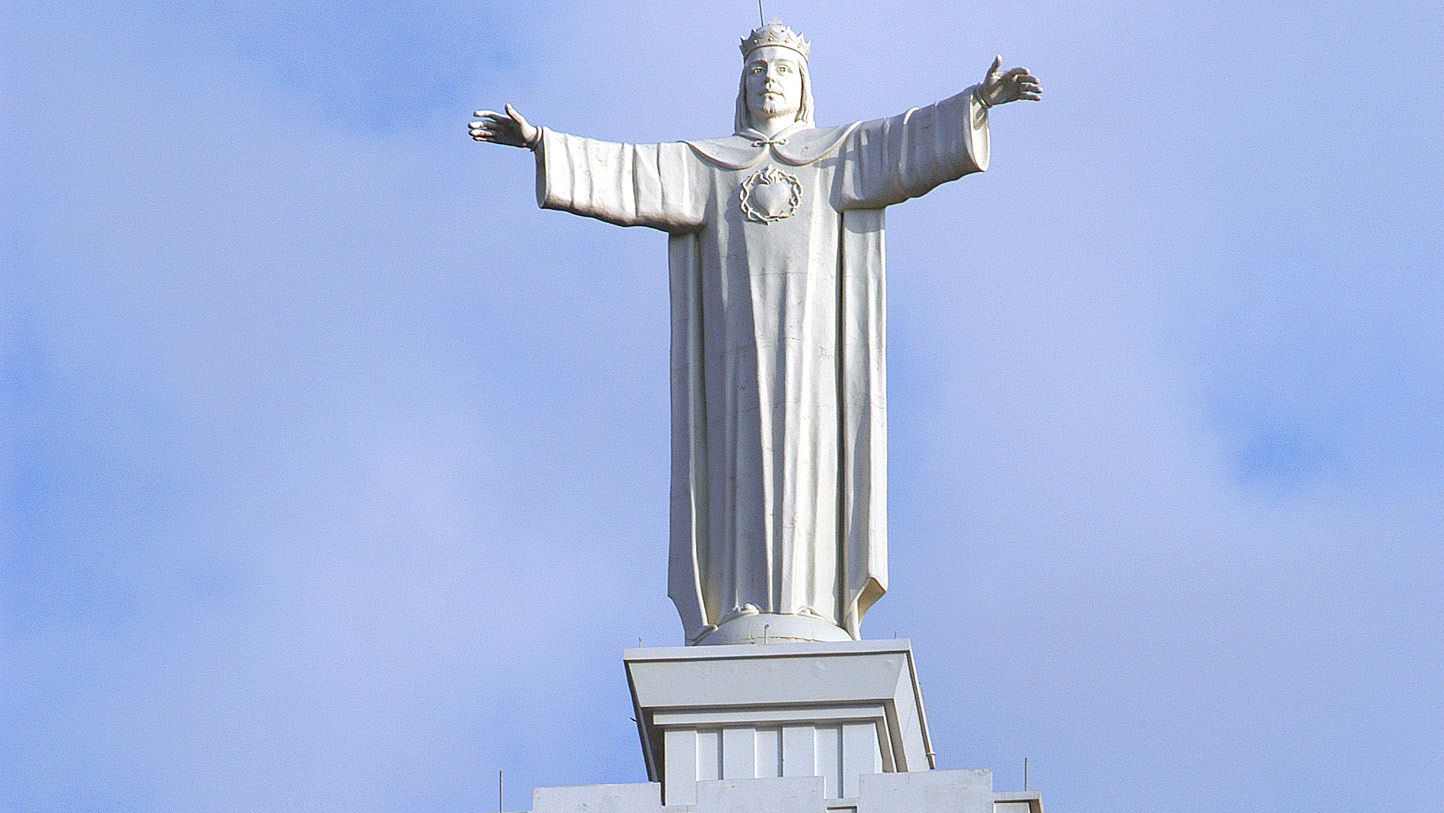

In 1950, Abouna Yaacoub purchased the hill located to the right of Nahr El Kalb River, and started the construction of the convent and the church. On December 1, 1952, he crowned it with a statue, a masterpiece by the Italian artist Ernesto Balini, representing Christ the King, weighing 75 tons, with a height of 12 meters, with open arms being 10 meters long. After fifty-eight years, the age-old dream has come true.
The statue of Christ the King is now erected on the hill called “The Ruins of Kings” in Zouk Mosbeh, Keserwan district, Mount Lebanon Governorate. Jesus refers with his right hand to Virgin Mary, in the temple of Our Lady of Lebanon, and with his left hand to the righteous educator, in the convent of Saint Joseph of the Tower, as if he is reuniting the Nazareth family here again! While all those kings and greats whose names are carved on those rocks are lost in the unseen and oblivion! They are all gone, but only Jesus remains as he is, yesterday, today and forever.
Christ the King is approximately 13 km away from Beirut and rises 90 meters above sea level. You can reach it via Beirut-Tripoli highway, passing through the river of Nahr El Kalb, upwards towards Jeita.
In front of the convent stretches a richly shaded courtyard, opening pleasantly to the sea and the valley of the Nahr El Kalb river. The visitor heads to this yard to reach the church of Christ the King and from there to the base of the statue at a height of 57 meters. In addition, the tower of the statue of Christ the King will be equipped, in addition to the stairs, with a panoramic glass elevator allowing the visitor who uses it to give thanks to God, especially when he finds himself hoisted in the heights, contemplating the panorama of the ocean, the river and the snow crowning the summit of Sannine in an extraordinary harmony.
Not far from the base of the statue, there will be a room containing photographs and paintings related to Blessed Abouna Yaacoub and inspired by his life, whose contemplation stimulates recollection and meditation.
Once the statue is visited, the visitor will be able to go to the convent church and enjoy admiring the mosaic that will bear the fingerprints of Fr. Marco Rupnik the Jesuit. At the entrance of a chapel to be built north of the church under the name of Abouna Yaacoub, a daily mass will be celebrated, and second chapel adjoining the first one will be reserved for constant adoration. To the right of the church, lounges and reception rooms will be open.
In addition to the above, the work site includes a screening room for documentary films which, for the most part, retrace the spiritual life of Abouna Yaacoub, and a second room for symposiums and conferences. A place to sell souvenirs will also be on hand.
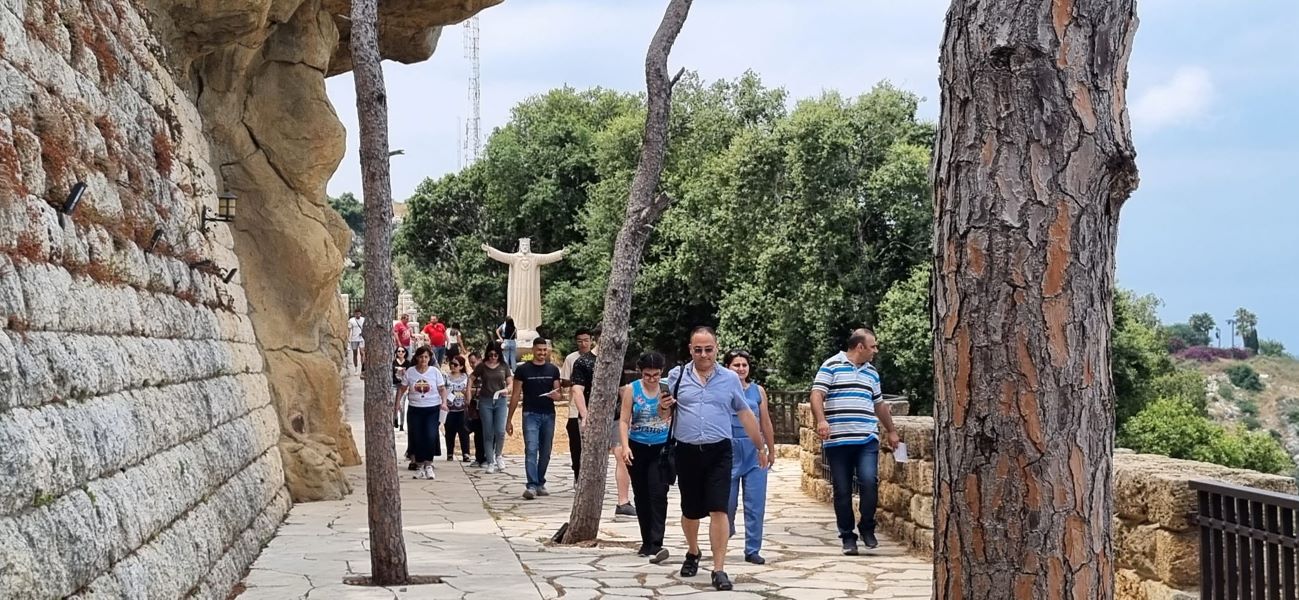
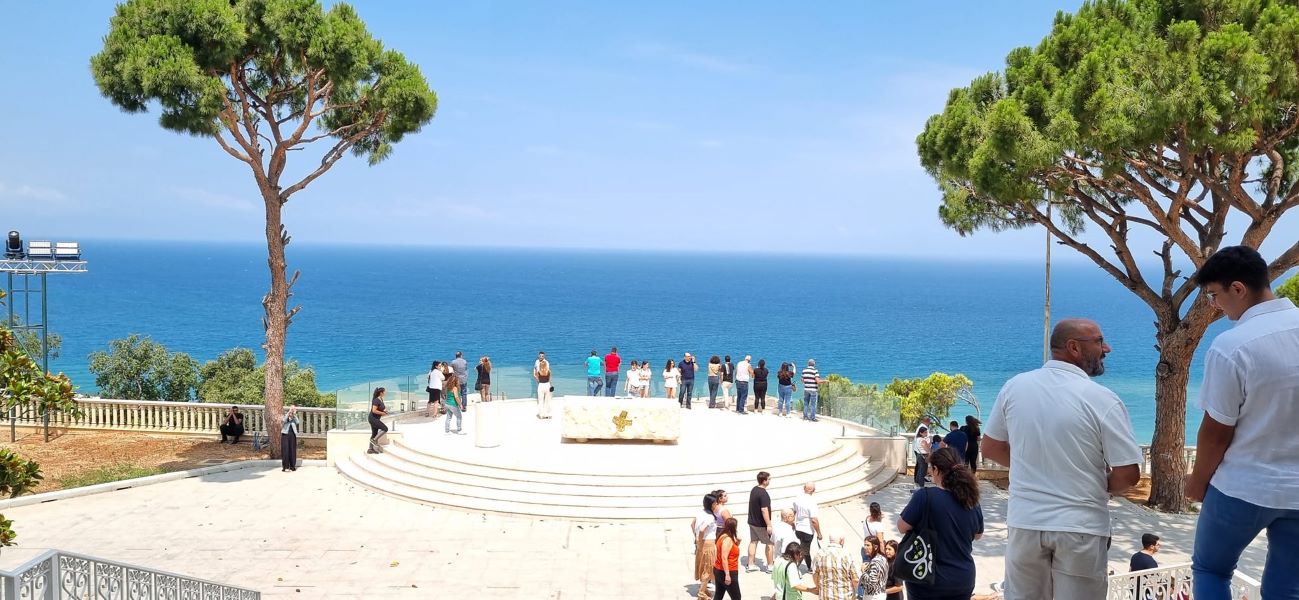
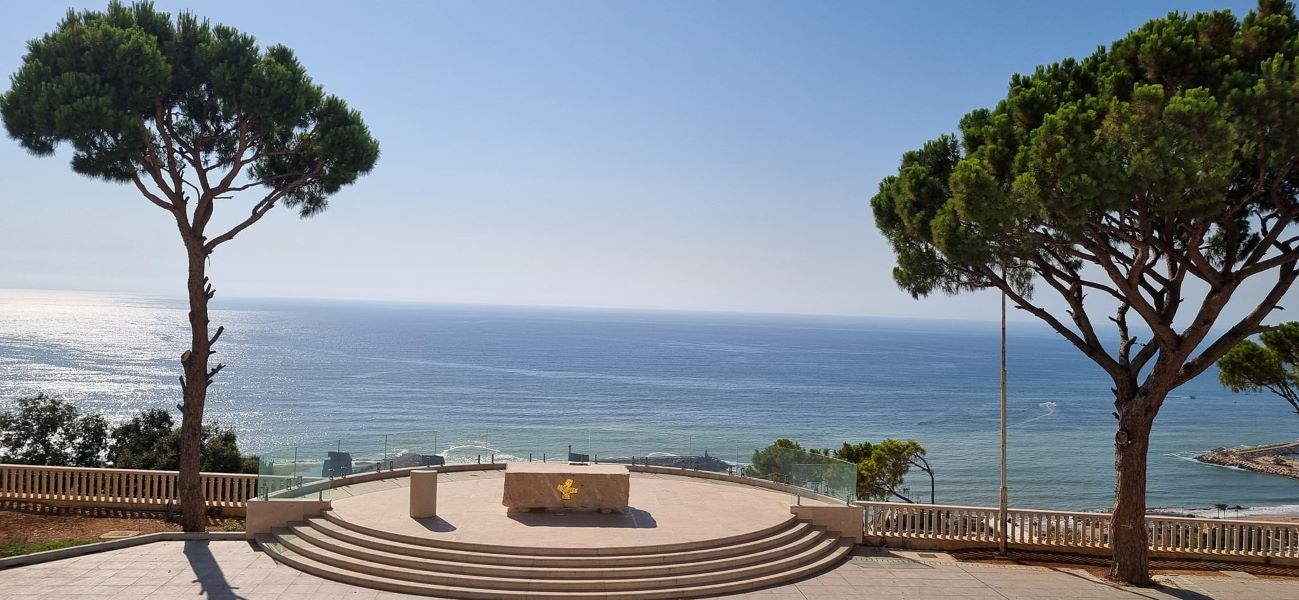
Below the wall of the convent towards the sea, workers discovered a natural grotto and told Abouna Yaacoub who shouted with joy: “This is for the Queen, the King doesn’t exist without the Queen“. He then made it a shrine to honor the Virgin, Queen of the Universe, and his statue was brought especially from Paris for the occasion. A new entrance to the grotto of the Queen of the Universe has been created with a space separating the exterior from the interior called “The Path of the Spirit”.Christ the King Day is celebrated on the last Sunday of October, and the Virgin Queen of the Universe Day on the last Sunday of May.

 Thursday 16 April 2026